

Company Overview

2.1 Business Location & Contact Information
Mailing Address & Office Location:
- Silver Home Care
- 680 Lincoln Hwy
- Fairless Hills, PA 19030
Phone Numbers:
- Main Office (24-hour line): 800-719-6912
- On-Call Supervisor: Press 2 from the main number
Office Hours Direct Contacts (Call/Text):
- Kelly Schmunk, Administrator: 267-547-0310
- Patti Carvahlo, Staffing Manager: 954-520-2843
- Email: support@silverhomecare.com
- Website: www.silverhomecare.com
We make every effort to answer calls as they come in. If we’re unavailable, your call will be returned as quickly as possible — typically the same day, and always by the end of the next business day.
Urgent care-related needs can arise at any time, and a supervisor is on call 24 hours a day to respond. For immediate support, call 800-719-6912 and press 2.
.📢 For emergencies, always call 911 first. Then notify the office if the emergency affects your care or schedule.
2.2 Hours of Operation
Note: Clients receiving care outside these hours still have 24/7 access to support via our on-call line at 800-719-6912.
2.3 Services We Provide
We offer a range of non-medical home care services, including:
- Personal Assistance Services (PAS) – CHC Medicaid
- Long-Term Care – Veterans Programs
Private Pay Services:
- Personal Care (ADLs)
Companionship
- Housekeeping
- Transportation
- Medication Reminders (non-administration)
- Respite Care for family caregivers
For more details, see Section 8: Description of Services.
2.4 Licensing, Medicaid, and Accreditation
Silver Home Care is licensed by:
- PA Department of Health, Home Care Agency License #3131601
- Medicaid Provider under Community Health Choices (CHC)
Authorized Managed Care Organizations (MCOs):
- PA Health and Wellness
- UPMC
- Keystone First
- NPI Number: [Insert NPI if known]
- Medicaid ID: [Insert Medicaid ID if needed]
We operate in full compliance with:
- 28 Pa. Code Chapter 611 (Home Care Agencies)
- 28 Pa. Code Chapter 52 (CHC Waiver Services)
- All applicable federal, state, and contractual guidelines
- We are committed to ethical practices, transparency, and legal compliance. You may request to view our license or regulatory policies at any time.
Our Mission & Service Philosophy

At Silver Home Care, we improve lives one visit at a time by embracing the values of independence, choice, and Person-centered care. Our philosophy centers on the belief that every individual has the right to shape their own care experience — and that our role is to support that autonomy.
We provide dependable, non-medical home care services tailored to each client’s needs and preferences. This means listening, adapting, and building relationships rooted in respect.
- Independence and Self-Direction
We believe every individual has the right to:
- Live comfortably in their chosen home or community
- Make their own decisions about care and lifestyle
- Direct their care in ways that align with personal goals and values
- Maintain control over how services are delivered
- Be supported — not replaced — in their independence
- Person-Centered Care
Our services are not one-size-fits-all. They are built around:
- Understanding the client as a whole person, not a diagnosis or checklist
- Respecting cultural, linguistic, spiritual, and familial identity
- Adapting care based on ongoing feedback and evolving needs
- Partnering with clients (and their families, when appropriate) to co-create care plans
- Honoring preferences — not just tolerating them
We involve you in:
- Identifying your specific goals and needs
- Planning your care and choosing how it is delivered
- Evaluating your satisfaction and making changes when needed
- Deciding what matters most — and ensuring your care reflects that
- We believe the most powerful care is the kind that helps you feel known, respected, and supported — on your terms.
Services We Provide

Silver Home Care provides a full range of non-medical home care services designed to support your independence, enhance your well-being, and make daily life easier and safer. Our services are personalized to meet your specific needs and delivered with respect, kindness, and professionalism.
Companionship
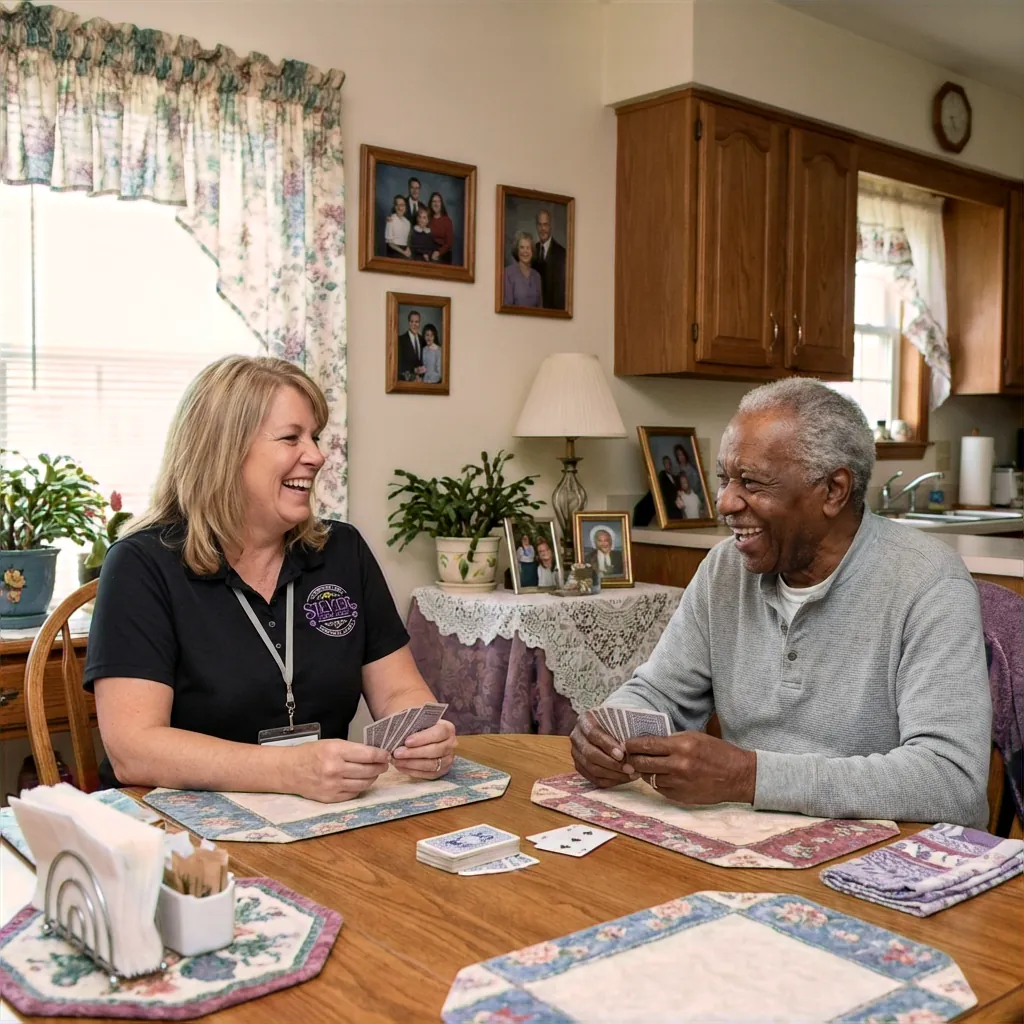
Companionship services help reduce loneliness, promote emotional well-being, and provide meaningful social interaction. Services may include:
- Friendly conversation and emotional support
- Accompaniment on walks or errands
- Games, puzzles, or other hobbies
- Monitoring for safety and comfort
Companionship is especially valuable for individuals who live alone or are isolated from friends and family.
Personal Care (ADLs – Activities of Daily Living)
Personal care services support clients with essential daily tasks while maintaining dignity and independence. This includes assistance with:
- Bathing or showering
- Dressing and undressing
- Toileting and incontinence care
- Mobility support and transfers
- Grooming, oral hygiene, and hair care
- Skin care (non-medicated, non-prescriptive)
Caregivers are trained to provide hands-on assistance while respecting your preferences and privacy.
Instrumental Activities of Daily Living (IADLs)
These services support independent living by helping with tasks that go beyond basic care. Services may include:
- Meal preparation (including dietary preferences)
- Grocery shopping or running errands
- Light housekeeping (laundry, dishes, vacuuming)
- Transportation to medical appointments or community outings
- Scheduling appointments or helping with reminders
- These supports can be vital for clients who want to remain in their homes with confidence and control.
Medication Reminders
Our caregivers provide reminders only — they do not administer medication.
We will:
- Remind you to take medications at the scheduled time
- Offer water and observe as you take medications
- Notify the office and/or family of missed doses
- Record reminders in daily notes for transparency
- All medications must be pre-filled in a pill organizer by a family member, nurse, or pharmacist. Caregivers may not fill pillboxes or handle loose medication.
Respite Care
For family caregivers who need time off, respite care provides peace of mind by ensuring your loved one is cared for in their absence. This can be short-term or ongoing, and includes:
- All standard personal care and companionship services
- Supervision during caregiver breaks, appointments, or travel
- Flexible scheduling — daily, weekly, or as needed
Respite care helps families avoid burnout while ensuring continuity of care.
All services are defined and authorized in your care plan, which is developed collaboratively before care begins and updated regularly. (See next section.)
Your Care Plan
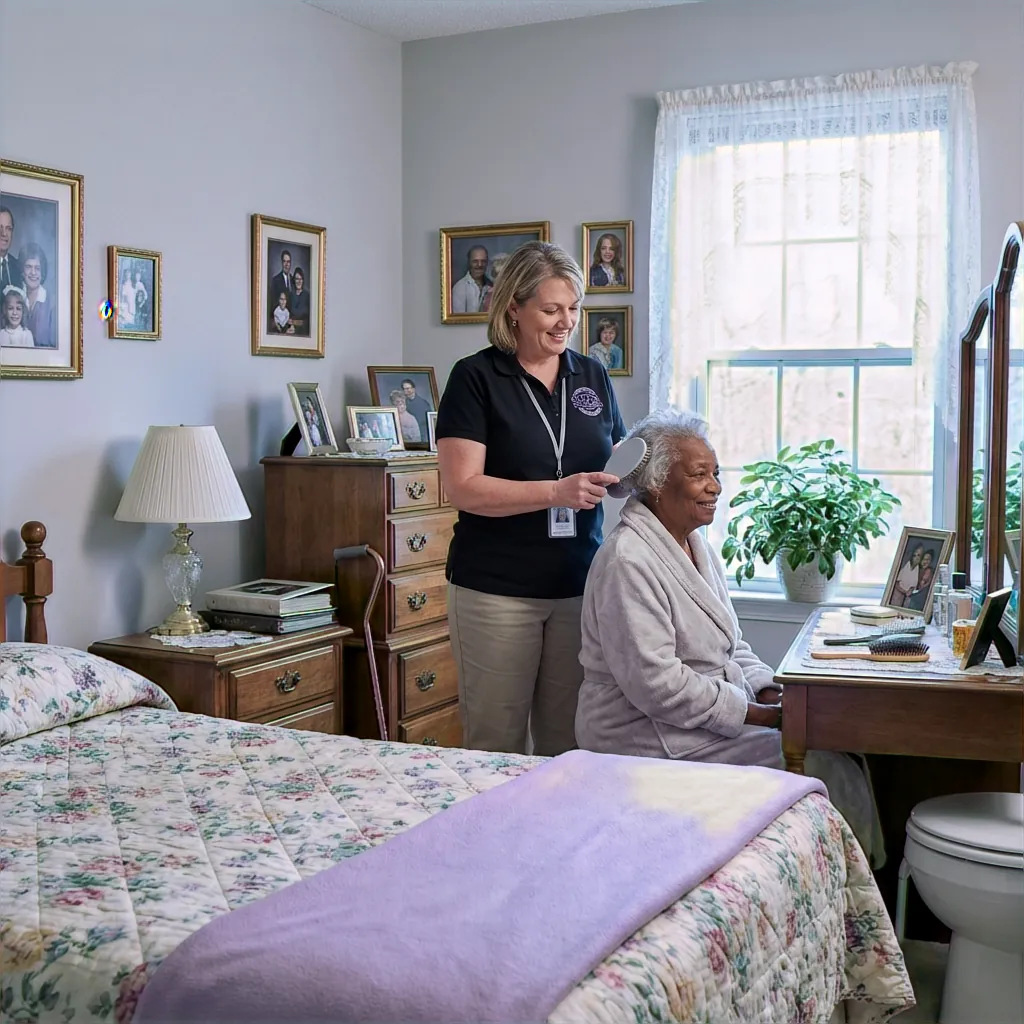
At Silver Home Care, we believe that each client is the author of their own story — and our role is to support that story with dignity, consistency, and personalized care. Your care plan is the foundation of your service with us, and it is designed collaboratively to reflect your unique needs, preferences, and goals.
Step 1: Pre-Visit Call
Before your in-person assessment, we will complete a brief phone call to gather basic information about:
- Your current situation and support needs
- Any medical or safety concerns
- Your preferences for scheduling or care approach
- This helps us arrive prepared and ensures the assessment is focused and respectful of your time.
Step 2: Initial Assessment
A member of our care team will meet with you — and any family, friends, or support professionals you wish to include — to complete a comprehensive assessment. This includes:
- Medical conditions and history
- Medication list
- Allergies and dietary restrictions
- Mobility and physical limitations
- Cognitive or behavioral considerations
- Home environment
- Emergency contacts and support systems
- Any preferences related to caregiver selection
We also ask about your values and routines — because great care is more than checkboxes. It's about what makes you feel safe, respected, and supported.
Step 3: Care Plan Creation
Using the information gathered, we will create a written care plan that outlines:
- Tasks to be completed
- The type and level of assistance needed
- Schedule of care (days/times)
- Any precautions, allergies, or specific routines
- Your goals and expectations
- Supervisory oversight and follow-up schedule
- We will review the plan with you (and your representative, if applicable) to ensure accuracy. Nothing is finalized without your approval.
Please have the following information available during your care planning meeting:
- Medication List: Name, dosage, schedule
- Medical Diagnoses: Current or chronic conditions
- Primary and Specialty Providers: Names and contact info
- Power of Attorney / Advance Directives: Copies if available
- Allergies and Food Restrictions
- Insurance Cards (Medicare, Medicaid, Private)
- Emergency Contacts
Step 4: Review and Revisions
Care plans are living documents. We review and update them regularly — especially when:
- There is a hospitalization or emergency
- You experience a change in condition
- You request a change
- A service coordinator or family member alerts us to a new need
Updates may involve an in-home visit or a phone review, depending on the nature of the change. Our goal is to keep your care plan current, accurate, and aligned with your life.
How We Choose & Train Your Caregivers

At Silver Home Care, our Direct Care Workers (DCWs) are the heart of what we do. We are committed to selecting compassionate, reliable individuals — and giving them the tools, training, and supervision they need to provide safe, respectful, person-centered care.
We do not believe that a good caregiver is defined by a resume. We look for people with the right temperament, not just the right experience — people who are kind, accountable, and invested in making a difference.
- Hiring & Background Screening
All applicants go through a rigorous hiring process, including:
- Face-to-face interviews, to assess personality, communication, and service mindset
- Reference checks
- PA criminal background checks
- FBI fingerprinting, if the applicant hasn’t lived in Pennsylvania for the past two consecutive years
- Medicaid exclusion screening
- Social Security number verification
We also verify work authorization and collect tax documentation. Candidates may be hired provisionally while background checks are pending, but continued employment is contingent on clean results.
🔎 Undisclosed criminal records result in immediate dismissal.
Disclosed records are evaluated through an individualized risk assessment, in line with current Pennsylvania law. We follow OLTL guidance, which prohibits blanket bans based solely on past convictions.
- Drug Testing & Fitness for Duty
- Pre-employment drug testing is required
All employees must attest that they will not use any substance — including over-the-counter or prescription medications — that may impair their ability to work safely
Legally prescribed substances permitted under Pennsylvania law do not disqualify candidates, but must not interfere with performance
If you suspect that a caregiver is impaired or unwell while on shift, notify the agency immediately.
- Training & Competency
Before beginning care, all Direct Care Workers must:
- Pass a basic competency exam, covering topics required by the Department of Health
- If a candidate does not pass, we provide targeted training and retesting
- Complete orientation, which includes both agency policies and role expectations
Within the first 90 days of employment, all DCWs complete comprehensive training on essential topics, including:
- Abuse, neglect, and exploitation prevention
- Activities of daily living (ADLs) and instrumental tasks (IADLs)
- Avoiding Medicaid fraud
- Bathing, dressing, and personal hygiene
- Client abandonment and professional boundaries
- Handling complaints and communication challenges
- Client rights and autonomy
- HIPAA and confidentiality
- Recognizing and reporting changes in condition
- Financial exploitation prevention
- Meal preparation and nutrition basics
- Incident and emergency reporting
- Fall prevention and mobility safety
- Toileting and incontinence care
- Standard precautions and infection control
- Person-centered care planning
- Cultural sensitivity and respectful engagement
- Emotional regulation and handling difficult behaviors
- Continuous quality improvement
- Ongoing training, supervision, and annual performance reviews ensure that our staff remains compliant, prepared, and accountable.
Our goal is to match each client with caregivers who reflect Silver Home Care’s core values — kindness, respect, accountability, inclusivity, and professionalism. If you ever feel that a caregiver is not the right fit, we welcome your feedback and will do our best to make adjustments.
Your Rights & Responsibilities

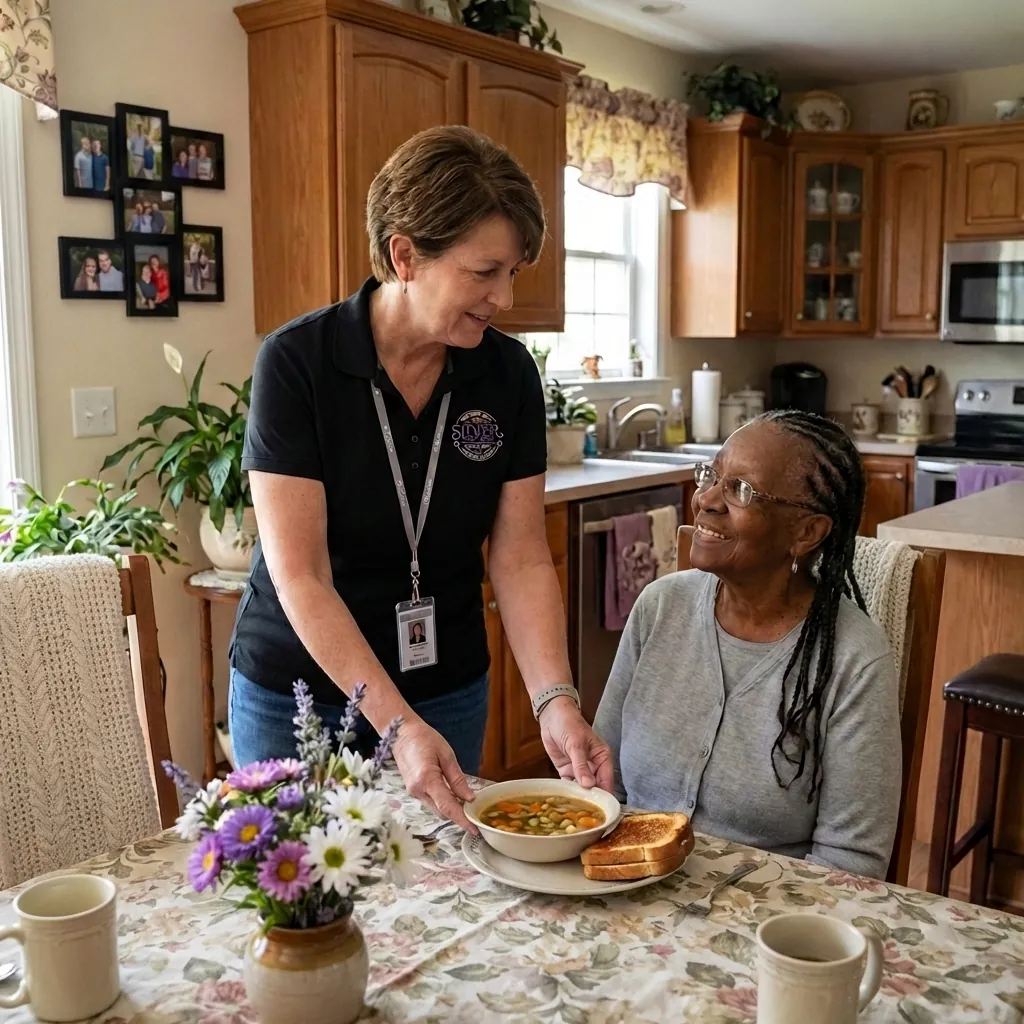
At Silver Home Care, we are committed to providing care that respects your dignity, privacy, independence, and individual needs. This section outlines your rights as a client, your responsibilities in the care relationship, and what you can expect from our agency. Understanding these guidelines helps ensure a safe, respectful, and cooperative environment.
4.1 You Have the Right To:
Consent to or refuse services at any time.
Be cared for by qualified, trained, and competent personnel.
Receive complete and understandable information about your service plan — developed in collaboration with you.
Have full access to the care record maintained by Silver Home Care.
Be treated with courtesy, dignity, and respect at all times.
Be spoken to in a language or manner that you can understand.
Expect privacy and confidentiality regarding your health, personal, and financial circumstances, in accordance with applicable laws and agency policies.
Speak freely and express yourself without fear of retaliation or judgment.
Be free from:
- Involuntary confinement
- Physical or chemical restraints
- Abuse, neglect, exploitation, and intimidation
- Report suspected abuse, neglect, or exploitation to the Elder Abuse Hotline — regardless of who is involved.
Receive care that recognizes and responds to your individuality, including:
- Cultural, ethnic, spiritual, linguistic, familial, or personal preferences
Voice concerns — verbally or in writing — about services that are:
- Provided improperly
- Not provided
- Disrespectful or damaging to you or your property
Be informed of:
- How to initiate complaints or resolve concerns
- Your right to do so without fear of retaliation
Be notified of:
- The cost of services
- Any increases in service costs
Be informed of:
- All laws, regulations, and agency policies that affect your care
- The names, certifications, and roles of those providing your care
- Who owns any equipment or supplies used in your service
- Have your home, belongings, and personal space treated with care and respect.
Participate in your care planning process, and receive:
- Clear explanations of proposed services
- Updates about changes to your care
- Alternatives when available
Receive written documentation of:
- Your care plan
- The names of assigned Direct Care Workers and supervisors
- The agency’s contact information
- Express preference for a specific caregiver and request changes if desired.
Expect that no information about you will be released without:
- Your written authorization
- Or a legal requirement to do so
- Receive timely notice (at least 10 days in advance) of any service changes or agency plans to terminate services.
- CHC participants will receive at least 30 days’ notice unless termination is due to nonpayment or safety concerns.
4.2 The Agency Is Responsible For:
Ensuring that all Direct Care Workers (DCWs) meet Department of Health competency requirements.
Reviewing each DCW’s competency:
- At least annually
- More often, if performance or client needs require
- Conducting face-to-face interviews with every DCW and independent contractor.
- Providing ongoing, competent supervision.
Maintaining appropriate:
- General liability insurance
- Professional liability insurance
- Worker’s compensation coverage
Performing:
- Criminal background checks
- Child abuse clearances (if applicable)
- Verifying that background clearances are complete and documented.
Informing you whether your caregiver is:
- An agency employee
- Or an independent contractor
Upholding all applicable standards for:
- Home care service delivery
- Federal, state, county, and municipal regulations
- Labor law compliance
- Developing contingency plans for emergencies.
Handling payroll:
- Making deductions for Social Security, Medicare, and other taxes
Conducting:
- Client needs assessments with your input
- Care plan development with you and your care team
- Coordinating with other professionals as needed.
- Establishing meaningful, measurable care goals.
Providing written documentation of:
- Services to be delivered
- Assigned caregivers and service hours
- Applicable rates and fees
Maintaining:
- Client confidentiality
- Privacy and dignity
- A professional code of ethics
- Avoiding the imposition of personal values or beliefs on clients.
Reporting:
- Signs of elder abuse
- Health and safety concerns
- Ensuring DCWs undergo screening for communicable diseases such as tuberculosis.
Providing access to:
All invoices related to your care, upon request
Giving clients the contact information for the PA Department of Health to file complaints.
Ensuring that:
- Staff do not assume Power of Attorney or guardianship over clients
- Clients do not endorse checks to the agency
- Ethical boundaries and fiduciary safeguards are upheld
4.3 You Are Responsible For:
Providing complete and accurate information about:
- Your health
- Medications
- Abilities or limitations
- Reporting any changes in your condition.
- Asking questions if you don’t understand any part of your care or plan.
- Following the service plan — or voicing concerns if it doesn’t meet your needs.
Accepting the consequences of:
- Declining services
- Deviating from the care plan
- Complying with the service agreement terms.
Giving advance notice if you:
- Need to cancel care
- Change your schedule
Informing the agency about:
- Any changes to your contact information
- Healthcare providers
- Insurance coverage
- Advance directives
Alerting the agency if:
- You or a family member may have a contagious illness
- There are environmental risks for caregivers (e.g., unsafe conditions)
Ensuring a safe environment, including:
- Restraining aggressive pets during visits
- Keeping weapons secure and out of work areas
- Maintaining a smoke-free space during care hours
Treating agency staff and DCWs with:
- Courtesy
- Respect
- Professionalism
- Protecting the dignity and personal privacy of your caregiver.
- Never asking staff to act outside the law.
- Paying bills on time, in accordance with agreed terms.
Assuming financial responsibility for:
- Materials, supplies, or equipment not covered by third parties
- Giving reasonable notice if service must be cancelled.
- Not lending or borrowing money or valuables from DCWs.
- Using discretion regarding any care records or documents stored in your home.
Protection from Abuse, Neglect & Exploitation

At Silver Home Care, your safety and dignity come first. You have the absolute right to be free from abuse, neglect, exploitation, intimidation, and restraints — and we take that responsibility seriously.
All employees, contractors, and volunteers are mandated reporters, meaning they are legally required to report any known or suspected abuse, neglect, or exploitation of a client. In certain situations, reports may be made without your prior knowledge to ensure your safety.
- Definitions of Harm
You are protected from the following:
Abuse
Any action that causes harm — physically, emotionally, or sexually. This includes:
- Hitting, slapping, grabbing
- Threats or intimidation
- Unwanted or inappropriate touching
- Verbal insults or manipulation
- Neglect
Failure to provide necessary care. This can include:
- Withholding food, medication, or hygiene assistance
- Leaving a client without supervision when care is required
- Ignoring safety needs or emotional well-being
- Self-Neglect
- When a person is unable to care for their own basic needs due to illness, disability, or cognitive decline. This may include:
- Poor hygiene
- Missed medications
- Unsafe living conditions
- Lack of nutrition or hydration
- This is not the same as making independent choices — it’s about identifying when someone cannot care for themselves safely and needs additional support.
- Exploitation
Taking advantage of someone — often financially. This includes:
- Stealing money or property
- Coercing someone to sign documents
- Gaining access to debit cards, checks, or accounts
- Pressuring a client to buy gifts or “loan” money
- Intimidation
- Any behavior meant to frighten, pressure, or silence someone — including verbal abuse, threats, or manipulation.
- Restraints
Use of physical restraints or medications to control someone’s behavior is strictly prohibited unless ordered by a physician and part of a licensed medical treatment plan. This does not apply to Silver Home Care, as we do not provide medical care.
Reporting and Support
If you feel unsafe, uncomfortable, or believe your rights are being violated in any of these ways:
- Contact Silver Home Care immediately at 800-719-6912
- Call Adult Protective Services at 1-800-243-3767
- You may also contact the Area Agency on Aging Ombudsman or the PA Department of Health (see Section 13 for full list)
- We will support you and take all concerns seriously. You will not face retaliation for speaking up.
Communication & Language Access

At Silver Home Care, we are committed to ensuring that every client fully understands their rights, care plan, financial responsibilities, and service agreement — regardless of communication barriers. We believe that clear, respectful communication is the foundation of person-centered care.
If you have difficulty speaking, hearing, or understanding English, we will provide appropriate supports to ensure your voice is heard and your needs are met.
- Language Access Services
If English is not your primary language, we will provide:
- Professional interpreters — available by phone or in person
- Bilingual staff when available
- Translated materials upon request
- Assistance understanding key documents, such as your service agreement or care plan
- Support for Hearing or Speech Challenges
If you are Deaf, hard of hearing, or non-verbal, we offer:
- Sign language interpreters, including American Sign Language (ASL)
- Captioned communication technology, including apps and devices that display text
- Visual aids, such as picture boards or written instructions
- Alternative communication tools, including typing-based systems or apps
We are committed to honoring your preferred method of communication. If you require a specific support tool or service, please let us know — and we will provide it.
Paying for Home Care

At Silver Home Care, we understand that navigating the financial side of home care can feel overwhelming. Whether you're paying privately or exploring assistance programs, our team is here to guide you — with clarity, transparency, and respect for your individual situation.
Private Pay
If you choose to pay out-of-pocket, private pay offers maximum flexibility in selecting services and scheduling. We will work with you to develop a plan that reflects your personal needs, goals, and preferences.
Long-Term Care Insurance
Many long-term care insurance policies cover non-medical home care services, including personal care and companionship. If you have a policy:
- We will assist you in understanding what is covered
- We will help you access your benefits
- We can provide required documentation or service records to support your claims
- Veterans’ Assistance
If you or your spouse is a veteran, you may qualify for assistance programs that pay for home care. These programs can help cover:
- Personal care services
Companionship
- Light housekeeping
- Respite care
We are happy to assist with the application process or provide supporting documents.
Community Health Choices (CHC – Medicaid)
If you meet Medicaid eligibility requirements, you may qualify for home care under Pennsylvania’s Community Health Choices (CHC) waiver. This program allows eligible individuals to receive care at home instead of entering a facility. We are contracted with all three CHC Managed Care Organizations:
- PA Health and Wellness
- UPMC
- Keystone First
We can help you determine eligibility, connect with a Service Coordinator, and enroll in the program if appropriate.
Home Equity Options
Some clients choose to explore home equity as a way to fund care. This may include:
- Reverse mortgages
- Home equity lines of credit (HELOCs)
These tools can help free up funds while allowing you to stay in your home. We recommend consulting a financial advisor to determine if this is a good fit for your long-term goals.
Consult an Elder Law Attorney
For complex financial planning, we strongly recommend consulting an elder law attorney. They can help with:
- Medicaid spend-down strategies
- Asset protection
- Irrevocable trusts for Medicaid planning
- Planning for the financial needs of a surviving spouse
- Navigating 401(k) accounts or retirement withdrawals
- Ensuring your decisions align with long-term goals
- Even a brief consultation can provide clarity and help prevent costly mistakes.
- Additional Financial Assistance
The Eldercare Financial Assistance Locator is a free tool that helps families identify programs that may help cover care costs. It includes over 400 resources from federal, state, and local agencies, as well as private and nonprofit programs.
Visit:
- 🔗 www.payingforseniorcare.com/longtermcare/resources/locator_tool.html
- We’re Here to Help
Whether you’re paying privately, relying on insurance, or exploring state-funded programs, Silver Home Care is here to support you. We will work with you to find solutions that meet your needs — with honesty, compassion, and respect.
Billing & Payment Policies

At Silver Home Care, we are committed to transparent, flexible, and client-friendly billing practices. Our goal is to make payment easy to understand and stress-free — whether you're paying privately, using long-term care insurance, or receiving covered services through a third-party program.
- Payment Terms
Billing is issued weekly based on the services provided.
Invoices are itemized, showing dates, services rendered, and charges.
Payments are due weekly, unless otherwise agreed.
- Accepted Payment Methods
We accept the following forms of payment:
- Personal check
- Credit or debit card
- Automatic bank withdrawal
- Cash App
- Venmo
- Zelle
- Please let us know which method you prefer. We can set up recurring payments or assist you with digital options if needed.
- Payment Support
If you're experiencing financial hardship or anticipate difficulty making a payment, contact us right away. We will work with you to explore solutions before a disruption in service occurs.
Medicaid or Third-Party Coverage
If your services are paid for by Community HealthChoices (CHC) or another program:
- You will not receive a bill from Silver Home Care
- No out-of-pocket charges will apply for covered services
You are still responsible for informing us of:
- Any insurance changes
- Loss of coverage
- Notices you receive about your plan
Please note that Medicaid fraud — including false documentation, unauthorized care hours, or financial arrangements between client and caregiver — is a serious offense. (See Section 16 for full policy.)
Questions About Your Bill?
We want you to feel confident and informed. If you have any questions about your charges, payments, or balances, please contact us directly. We’re happy to review your account, explain any charges, and make adjustments if necessary.
Safety & Emergencies
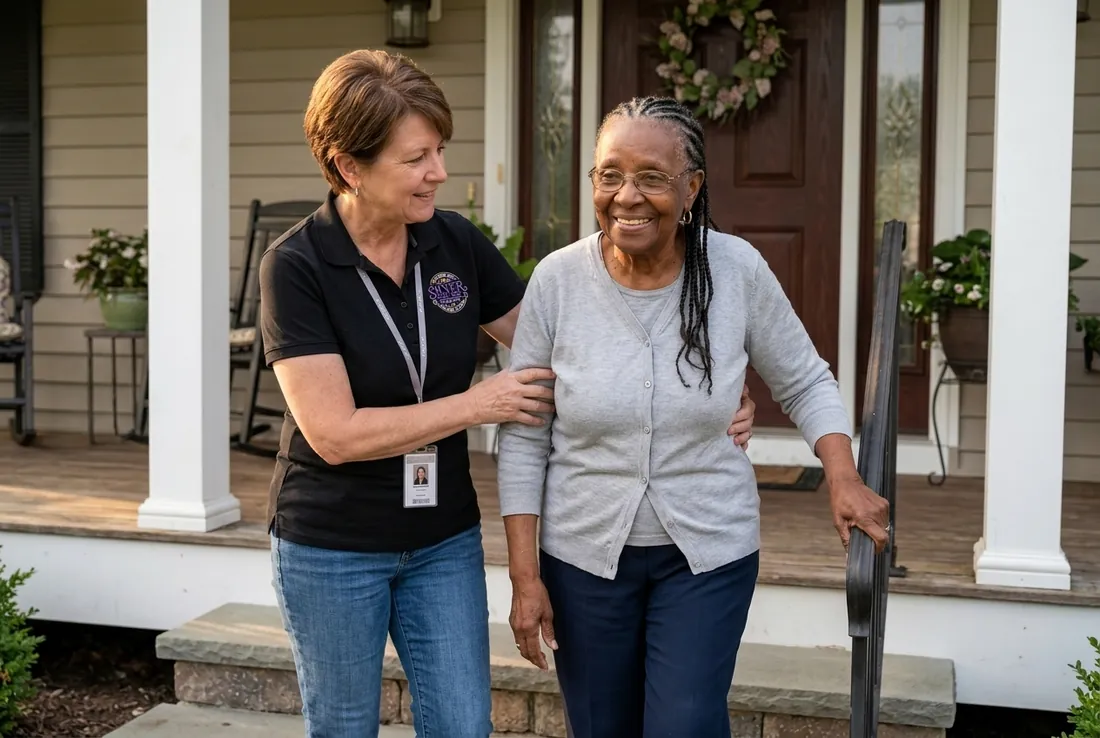
At Silver Home Care, we take your safety seriously — not just as a policy, but as a core responsibility. We’ve developed procedures and training to make sure we’re prepared for emergencies, attentive to risks, and proactive about prevention.
- Direct Care Worker Safety Training
All Direct Care Workers receive training in:
- Emergency response and first aid basics
- How to respond to falls or injuries
- When and how to call 911
- Recognizing signs of medical distress
- CPR and AED procedures, where required
- Infection control and universal precautions
- Client-specific safety needs, as documented in the care plan
- Our caregivers are trained to prioritize your safety and to alert the agency immediately if an incident, concern, or emergency occurs.
Emergency Preparedness
Silver Home Care maintains an agency-wide emergency preparedness plan that includes:
- Response procedures for natural disasters, power outages, or extreme weather
- Protocols for evacuations and client relocation, if applicable
- Ensuring caregivers know how to act quickly and follow clear communication channels
- Making sure clients who rely on daily care are not left vulnerable during emergencies
We recommend that you keep a personal emergency kit in your home with:
- Flashlights and extra batteries
- At least 3 days’ worth of medication
- Emergency contacts (family, doctors, pharmacy)
- A copy of your care plan and insurance card
- Basic nonperishable food and water
- Cell phone charger and essential supplies
Personal Emergency Response Systems (PERS)
We can help you obtain or set up a Personal Emergency Response System, such as a wearable medical alert button. These devices connect directly to 24/7 monitoring centers and can dispatch EMS quickly.
If you already have a device, please let us know. We’ll document it in your care plan so our staff knows how to support its use.
Direct Care Worker Supervision
All DCWs are supervised by a designated supervisor and their performance is monitored routinely. If safety concerns arise — including mobility, cognition, or home hazards — we update the care plan and notify appropriate parties.
- Your Role in Safety
You can help us ensure safe care by:
- Alerting us to changes in your health, mobility, or medications
- Keeping hallways and walkways clear of clutter
- Reporting malfunctioning equipment or safety hazards
- Making sure pets are secured during care visits
- Informing us of upcoming surgeries or medical procedures
- Telling us if your living situation or contact information changes
- When emergencies happen, we act quickly. But our goal is always prevention first.
Complaints & Grievances
At Silver Home Care, your experience matters — and so does your voice. If you ever feel concerned, uncomfortable, or dissatisfied with any part of your care, we encourage you to speak up. You have the right to express complaints without fear of retaliation, and we are committed to resolving concerns promptly and respectfully.
- How to File a Complaint
You can file a complaint in any of the following ways:
- Call the office at 800-719-6912 and ask to speak with Kelly Schmunk, Administrator
- Send an email to support@silverhomecare.com
- Submit a written complaint (we can provide a complaint form upon request)
- Report an issue directly to your Service Coordinator or Managed Care Organization (if applicable)
- We welcome complaints submitted by clients, family members, caregivers, or advocates.
- What Happens Next
Once we receive your complaint:
- Review & Investigation
- Our team will look into the matter thoroughly and confidentially.
- Response
- We will follow up with you to explain what actions will be taken and to clarify any next steps.
- Resolution
- We’ll make every effort to correct the problem, address your concerns, and improve your care experience.
If You’re Not Satisfied
If you feel that your complaint was not resolved — or if you prefer to report your concern to an outside authority — you may contact:
- 📞 State Agencies and Advocacy Contacts
- PA Department of Health – Complaint Hotline
- 1-800-254-5164
- Home Care Licensure Office
- 717-783-1379 or 1-800-222-0989
- Adult Protective Services (APS)
- 1-800-243-3767
- (For reports of abuse, neglect, exploitation, or self-neglect)
- 🧓 Area Agencies on Aging
- Bucks County Department of Aging
- 267-880-5716
- Montgomery County Department of Aging
- 610-278-3601
- Philadelphia Corporation for Aging
- 215-765-9000
- 🗣️ Ombudsman Program – Pennsylvania Department of Aging
The Ombudsman is a neutral third party who helps advocate for your rights.
📞 717-783-8975
We want to know when things go wrong so we can make them right — and make our care better for everyone. Your feedback helps us grow.
Home Surveillance Guidelines

At Silver Home Care, we respect your right to protect your home and feel secure. Some clients choose to install video or audio surveillance equipment for peace of mind. We support the responsible use of such systems, provided that the privacy and dignity of caregivers are also protected.
This section outlines our expectations around in-home monitoring to ensure a safe, respectful environment for both clients and staff.
Your Right to Use Surveillance
The choice to use video surveillance in your home is yours to make. You are not required to notify Silver Home Care or your Direct Care Worker (DCW) about the presence or location of surveillance equipment.
However, we ask that you use these systems responsibly and ethically.
Privacy Requirements
To protect the dignity of caregivers, surveillance must not be placed in:
- Bathrooms
- Any space where a caregiver would reasonably expect personal privacy
Use of Recordings
If a caregiver is recorded while on duty, those recordings may not be shared with anyone outside your immediate care team.
Recordings should only be shared with:
- The Silver Home Care office
- Adult Protective Services or other appropriate authorities
- Law enforcement, if required for legal matters
- 🚫 Recordings must never be posted online or shared on social media, even with identifying information blurred or removed.
Expectations for Staff
Our caregivers are trained to conduct themselves with professionalism and integrity at all times — whether or not surveillance is present. Surveillance should never be a substitute for open communication or supervisory feedback. If you have a concern about a caregiver, please contact the office directly.
We are committed to safety, trust, and mutual respect. These guidelines are designed to uphold those values for everyone involved.
Scheduling & Communication
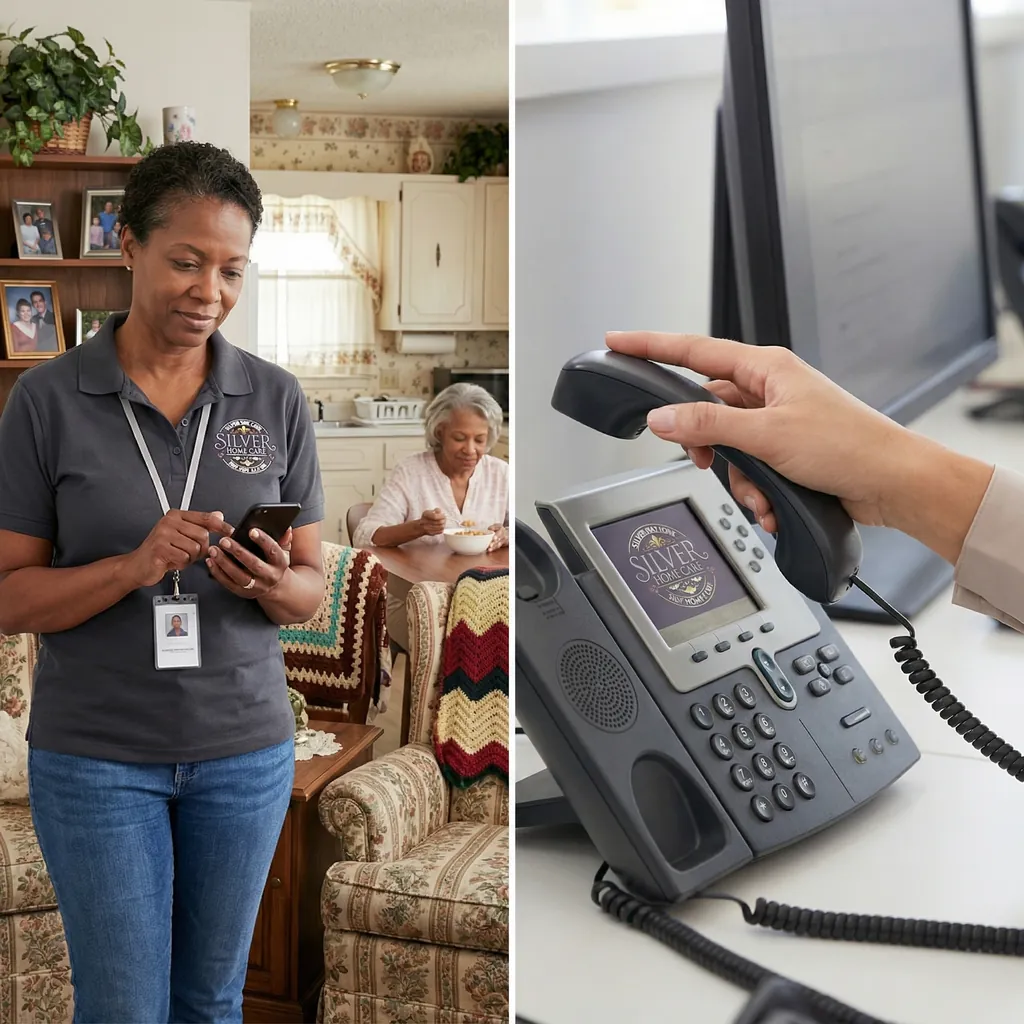
Clear communication and thoughtful scheduling are essential to consistent, high-quality care. This section outlines how to request schedule changes, what to expect when things shift, and how to maintain respectful boundaries between clients and caregivers.
Communicating with Direct Care Workers
We understand that building a personal connection with your caregiver is a natural and valuable part of the care relationship. However, to protect everyone’s time and privacy:
Please limit contact with your caregiver to their scheduled work hours.
It’s okay to exchange phone numbers for coordination during shifts (e.g., if you need to step out or discuss an errand).
It is not okay to contact them outside of scheduled hours for:
- Absences or lateness
- Schedule changes
- Personal issues or requests
Caregivers are instructed to redirect all off-hours communication to the agency. This ensures that your needs are addressed promptly and that staff boundaries are respected.
How to Request Schedule Changes
For all scheduling needs — including caregiver preferences, cancellations, or temporary changes — contact:
- Patti Carvahlo, Staffing/Scheduling Manager
- 📞 954-520-2843 (call or text during business hours)
- 📧 Patti@silverhomecare.com
Policy on Schedule Adjustments
Please provide at least 7 days’ notice for planned schedule changes or cancellations whenever possible.
We do our best to maintain consistent caregiver assignments, but rare substitutions may be necessary due to caregiver availability or emergencies.
You will always be notified of any changes, and you have the right to decline a substitute if you prefer.
- If a Caregiver is Late or Absent
If your caregiver is unavailable or running late:
- We will notify you as soon as we’re aware
- We will offer a replacement if one is available
- If no one is available, you’ll be informed and given the option to reschedule
- We know how disruptive missed shifts can be and we’ll always do our best to minimize interruptions.
- When to Notify the Office Immediately
Please inform us as soon as possible if any of the following occur:
- A fall, injury, ER visit, or hospitalization
- A noticeable change in your health or condition
- A change to your home environment or living situation
- Upcoming surgeries, travel, or major events
- You have concerns about your caregiver’s performance or professionalism
- You experience missed visits or recurring scheduling problems
- You may also contact the office if you believe your care plan needs to be updated or if you're experiencing changes in ability, safety, or preferences.
- Required Check-Ins and Visits
As part of our regulatory obligations, we will conduct:
- Quarterly phone check-ins to review your care, confirm satisfaction, and address concerns
- Six-month in-home visits to update your care plan and ensure services remain appropriate
- Your participation helps us provide care that reflects your current needs.
- After a Hospitalization or Rehab Stay
To ensure a safe and smooth return home:
- We do not provide transportation from the hospital. Please make arrangements in advance.
- Let the hospital social worker know that you are receiving home care and will need coordination before discharge.
- Notify us as soon as you know your discharge date.
- We require at least 48 hours’ notice to resume care
- Same-day coverage may not be available
- We will schedule a home visit and update your care plan based on any new needs or changes from your hospital stay
- Please provide a copy of your discharge instructions
- This process helps us resume services safely, with the right supports in place.
Financial Boundaries & Medicaid Fraud Prevention
At Silver Home Care, we are committed to protecting both our clients and staff from financial harm, misunderstandings, or inappropriate situations. That means setting clear boundaries and educating clients and caregivers alike about what is — and is not — permitted when it comes to financial matters.
We also take our responsibility as a Medicaid provider seriously. Any participation in Medicaid fraud, even unintentionally, can lead to serious consequences for everyone involved.
Financial Boundaries: What Caregivers Can and Cannot Do
Direct Care Workers (DCWs) may only assist with financial tasks that are clearly written in the care plan. If a task is not listed, it is not permitted.
Caregivers May Assist With:
- Writing checks only for your approved expenses
- You must review and sign the check yourself
- Pre-signing is not allowed
- Using cash, debit, or credit cards to make purchases only with your permission and only for approved tasks
- Collecting and returning receipts and change to you immediately after each purchase
Caregivers May Not:
- Hold, manage, or store your checks, cards, or banking info
- Know or use your PIN numbers
- Withdraw money from an ATM
- Become an authorized user or account representative
- Accept money, loans, or gifts of significant value
- Sell you goods or services
- Ask you to sign anything you don’t fully understand
- These boundaries exist to protect both you and the caregiver — and to prevent conflicts of interest, theft, or even false allegations.
- Your Responsibilities
As a client, you agree to:
- Remain actively involved in all financial decisions and transactions
- Report any suspicious activity immediately
- Never ask a caregiver to make purchases or handle tasks that fall outside of their scope
- Never loan money or items of value to a caregiver
- Keep payment tools (checks, cards, cash) in a secure location
- Let us know if you are no longer able to manage these responsibilities
- If you need help managing finances, we can refer you to community resources, elder law attorneys, or social service programs.
Medicaid Fraud Prevention
If you are receiving services under Community HealthChoices (CHC) or another Medicaid-funded program, you are responsible for honestly participating in the documentation of your care.
Examples of Medicaid fraud include:
- ❌ Manipulating Electronic Visit Verification (EVV)
- Logging hours that were not worked
- Falsifying visit times or care tasks
- Signing off on care that didn’t happen
- ❌ Splitting Payments or Creating Fake Arrangements
- Agreeing to “split” payment with your caregiver
- Falsifying schedules for extra hours
- Claiming care was provided when it wasn’t
- ❌ Misusing Care Hours
- Allowing caregivers to use care time for personal tasks
- Letting caregivers sleep, run errands, or “hang out” during paid time
- Signing off on time sheets that don’t match what happened
- Even if you don’t directly benefit, participating in or ignoring these actions makes you legally responsible.
Protecting the Program (and Yourself)
The Medicaid system exists to serve those who need it. Misuse of these funds puts the entire program at risk — and can result in:
- Immediate termination of services
- Investigation by state authorities
- Permanent disqualification from home care programs
- Legal action or financial penalties
We’re here to provide honest, ethical care — and that only works when everyone involved commits to the same standard.

Advance Directives & Future Planning
Planning ahead helps ensure that your health care choices are respected — even if you’re unable to speak for yourself. At Silver Home Care, we support your right to make decisions in advance and want to ensure that your wishes are understood and followed.
This section explains what advance directives are, how to create them in Pennsylvania, and how we use that information to guide your care.
What Are Advance Directives?
Advance directives are legal documents that allow you to outline your health care preferences in case you become unable to make or communicate decisions. They typically include:
📝 Living Will
Specifies the types of medical treatment you do or do not want (e.g., feeding tubes, ventilators, resuscitation) if you become seriously ill or unconscious.
👥 Health Care Power of Attorney
Appoints someone you trust — a health care agent — to make medical decisions on your behalf if you are unable to do so.
- Why They Matter
Advance directives:
- Give you control over your medical care
- Reduce stress and uncertainty for your loved ones
- Help caregivers and health professionals honor your wishes
- Ensure care aligns with your values and beliefs
At Silver Home Care, we do not provide medical treatment, but we may be involved in emergencies or transitions that require quick communication. Having clear instructions on file can make a significant difference in ensuring the right people are contacted and the right decisions are made.
Do You Already Have an Advance Directive?
During your intake and care planning meeting, we’ll ask:
- Whether you have an existing advance directive
- If you would like to provide a copy for our records
- Whether you have named a Power of Attorney (POA) or health care proxy
We will document this information and use it to guide communication and support in emergencies. You are not required to have an advance directive, but we strongly encourage it.
How to Create One in Pennsylvania
You do not need a lawyer to complete basic advance directive forms. Here’s how to get started:
1. Access Forms
Download free advance directive forms from the Pennsylvania Department of Health website:
🔗 Living Will and Health Care Power of Attorney Form
Forms may also be available from your doctor, hospital, or local senior center.
Incident Notification

At Silver Home Care, we believe in transparent communication when something goes wrong. Whether it’s a safety issue, medical concern, or any unexpected event, we are committed to notifying you promptly — and ensuring that appropriate follow-up occurs.
This section outlines the types of incidents we will notify you (or your authorized representative) about, when we will contact you, and what steps we will take after an incident occurs.
What Is Considered an “Incident”?
An incident is any unusual, unexpected, or concerning event that affects your health, safety, well-being, or the delivery of your care. This includes events that may not cause harm but could have — or may require a change in your care plan.
Types of Incidents We Will Notify You About:
We will contact you (or your representative) as soon as reasonably possible if any of the following occur:
- 🚨 Medical or Safety Events
- A fall, whether or not you are injured
- Any injury that occurs during the shift, even minor ones (cuts, bruises, skin tears)
- Loss of consciousness, confusion, or sudden change in mental status
- Medical emergencies (e.g., chest pain, difficulty breathing, seizure)
- A 911 call or emergency room transport
- 🧠 Changes in Condition
- Noticeable decline in function, alertness, appetite, or mood
- Refusal to eat, drink, or take medications for an extended period
- Sudden difficulty walking or increased instability
- Signs of possible infection (e.g., fever, new wound, UTI symptoms)
- 🧹 Environmental or Safety Concerns
- Unsafe home conditions (e.g., loss of power, heat, or water)
- New hazards in the home (e.g., broken equipment, bedbugs, smoke alarms not working)
- Situations that may require temporary suspension of services due to safety
- 🧾 Service Interruptions
- A missed or delayed shift without prior notice
- A caregiver leaving a shift early
- A caregiver being removed from your care permanently for any reason
- 💬 Behavioral or Emotional Concerns
- Aggressive, threatening, or inappropriate behavior directed at or by any party
- Client appearing disoriented, confused, or at risk for wandering
- Any signs of self-neglect, including refusal of care or hygiene assistance
- 📄 Regulatory or Reporting Events
- Any incident that requires reporting to Adult Protective Services
- Any documentation errors or Electronic Visit Verification (EVV) issues that may affect billing or records
How and When We Notify You
- For urgent matters, we will call you (or your representative) immediately
- For non-urgent concerns, we will notify you by phone within 24 hours
- All incidents are documented internally, and a report is available upon request
We may also notify your Managed Care Organization (MCO) or Service Coordinator, depending on the nature of the incident.
- Your Role
We encourage you to:
- Let us know if you notice something that doesn’t seem right
- Report any injuries or changes that happen between caregiver visits
- Keep emergency contacts updated so we can reach someone quickly if needed
- Together, we can respond to challenges proactively — and adjust your care as needed to keep you safe and supported.
Your Privacy & Information Sharing
At Silver Home Care, your privacy is one of our highest priorities. We are committed to protecting your personal, health, and financial information — and to being transparent about when, why, and with whom we may share it.
- What Information We Keep
As part of your care, we maintain records that may include:
- Your name, address, phone number, and emergency contacts
- Your medical history, diagnoses, medications, and allergies
- Your service plan, care notes, and any incidents or changes
- Insurance information or billing details (if applicable)
- Authorized representatives, such as Power of Attorney or guardians
- These records are stored securely and only accessed by authorized staff involved in your care or administration.
- When We Share Information — and Why
We may share information from your record only as needed to:
- Provide or coordinate your care
- Update your authorized contact (POA or representative)
- Communicate with your Service Coordinator or insurance provider
- Respond to emergencies or urgent medical needs
- Comply with laws and reporting requirements (e.g., APS or the Department of Health)
- Complete billing, scheduling, or audits as required by funding sources
- Assist in investigations of safety or misconduct concerns
- We do not share your information with third parties for marketing or unrelated purposes.
- Who We May Share Information With
Your information may be shared with:
- Your authorized contact or POA
- Medical professionals involved in your care
- Service Coordinators or Managed Care Organizations (CHC)
- Adult Protective Services (if a report is required)
- Regulatory agencies (e.g., Department of Health)
- Emergency responders (e.g., EMS, fire, police)
- Legal representatives, when required by law
- We limit what is shared to only what is necessary for the situation — and never more than needed.
- Your Rights
You have the right to:
- Request a copy of your service plan or records
- Ask who has received your information
- Add, correct, or update information in your file
- Request limits on how your information is shared
- Revoke your consent to share information (except where required by law)
If you’d like to place specific limits on what is shared and with whom, please speak with a member of our administrative team. We’ll document your preferences and honor them whenever possible.
Termination of Services
At Silver Home Care, we are committed to providing reliable, respectful, and person-centered care. However, there may be circumstances in which services are ended — either by the agency or by the client. This section outlines our policies regarding termination of services, including notice requirements, valid reasons, and how we strive to handle these situations with dignity and professionalism.
Reasons We May Terminate Services
Silver Home Care reserves the right to end services at our discretion for reasons including (but not limited to):
- Non-payment or repeated late payment for services
- Behavior that creates an unsafe or hostile environment for staff
- Physical, emotional, verbal, or financial abuse directed at staff
- Repeated cancellations or refusal of scheduled care
- Involvement in fraudulent activity or falsification of records
- Violation of boundaries related to finances, medications, or supervision
- Health or environmental conditions that pose an unmanaged safety risk
- Inability to provide appropriate care due to a significant change in client needs
- Any other situation in which continuation of services is no longer safe, feasible, or ethical
Notice Requirements
In most cases, we will provide written notice at least 10 days in advance of a planned termination.
Community HealthChoices (CHC) participants will receive 30 days’ written notice, as required.
In urgent situations — such as those involving staff safety, client misconduct, or fraud — services may be terminated immediately without advance notice.
All terminations are documented, and where possible, we will assist in coordinating care with another provider to ensure continuity.
- If You Choose to Terminate Services
Clients have the right to stop services at any time. To do so:
Notify the agency in writing or by phone
We ask for at least 24 hours’ notice, whenever possible, to allow for scheduling adjustments
If you are enrolled in CHC, we will inform your Service Coordinator and help facilitate the transition
We respect your right to change providers, adjust your care, or end services altogether — and we aim to handle all transitions with courtesy and cooperation.
At Silver Home Care, we value every client relationship and never take the decision to end services lightly. Whether it’s a necessary closure or a mutual decision, we strive to ensure that each client’s journey is treated with respect and care.